
A single front camera answers a lot of everyday questions: what happened in front of you, what the light looked like, and how you approached an intersection. It cannot see a car that hits you from behind, a plate that only appears in the rear glass, or a dispute that happens in the cabin. If you are choosing a camera because you want protection after an incident, the number of lenses matters as much as the marketing on the box.
This guide is about what each viewpoint is for. For a more general comparison of one- versus two-channel kits, see front versus front-and-rear. For how footage is used after a crash, see how dash cam footage helps after an accident.
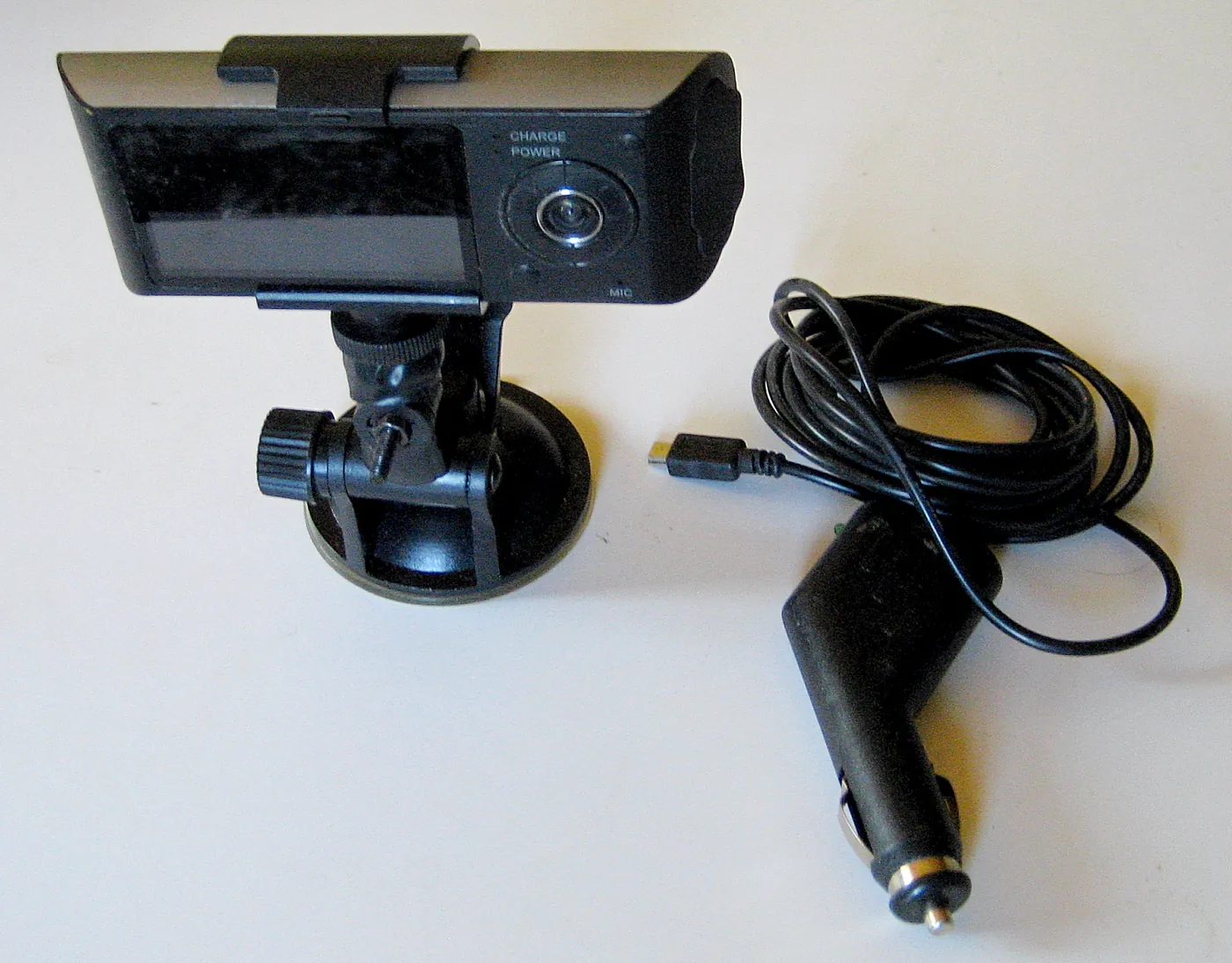

What the front camera is for
The front camera is the default for a reason. Most of the view you are negotiating — traffic ahead, junctions, pedestrians in the crosswalk, a car that cuts across your path — happens in front of the windshield. A clear, well-mounted front unit is still the first camera to get right: a stable mount, a view that is not blocked by the mirror, and picture quality you have actually checked at night.
A higher-resolution front camera can make a distant plate or a traffic signal easier to read, with the usual limits of light and distance. That is useful after a hit-and-run that starts in front of you, or after a collision where the argument is about a light or a lane. It will not, by itself, document a rear-end impact or a person standing at your back door.
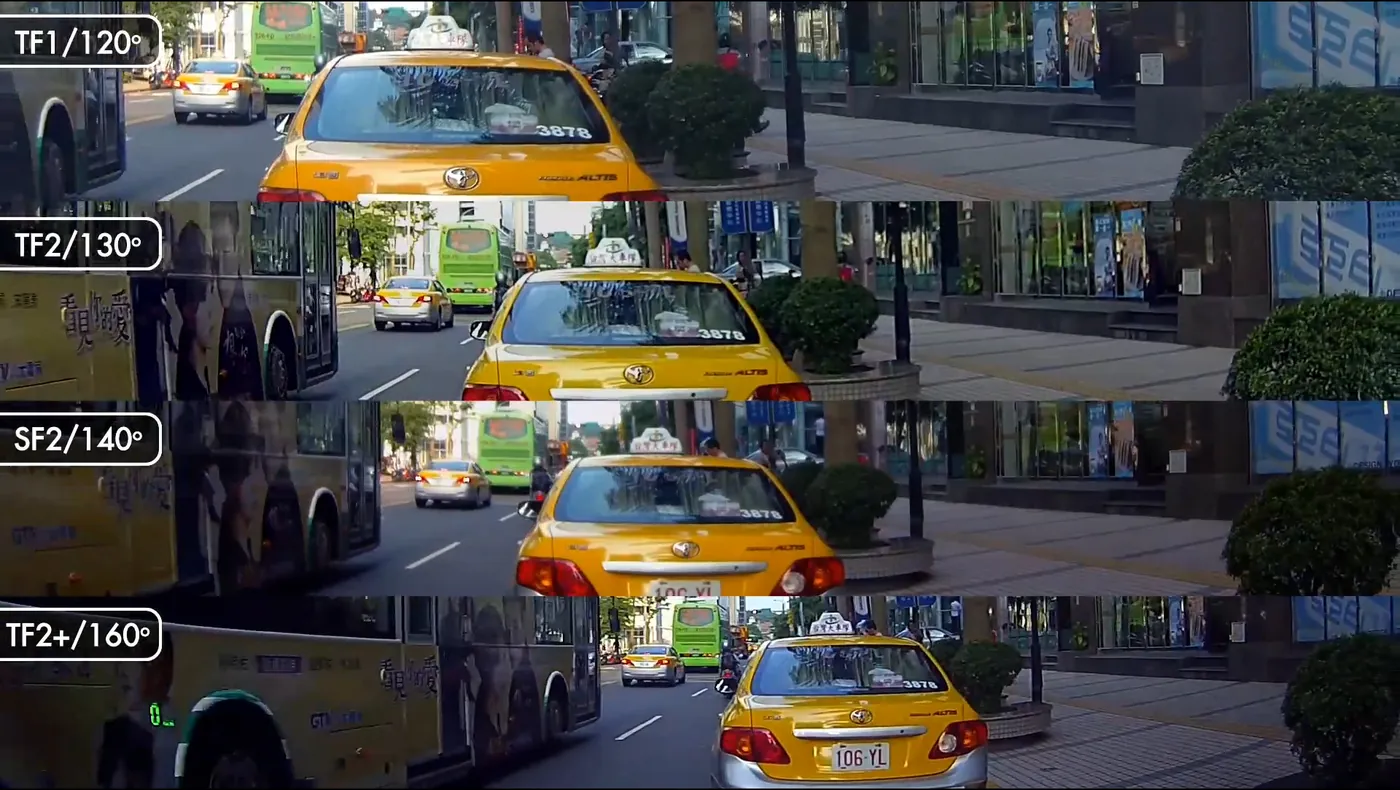
Field of view is a trade-off. A wider lens takes in more of the intersection and more of the vehicles beside you, but it can also shrink and distort objects at the edge. A narrower view can look more natural and keep a plate larger in the frame, but it may miss a car that enters from the side. Sample footage is more useful than a single degree number on a box.

What a rear camera adds
A rear camera is the most common second lens, and it earns its keep in a few specific incidents:
- You are hit from behind at a light or in slow traffic.
- A car sideswipes you and the useful plate is only visible as it recedes.
- Someone hits your parked car’s rear bumper and the front lens never saw it.
In a crash-for-cash situation, a sudden stop in front of you may be only half the story. A rear camera can show how close the following vehicle already was, or how the movement unfolded behind you. In a parking lot, parking mode is much more useful if the rear unit stays on as well; many bumper hits happen out of the front camera’s view.
A dual-channel kit is often simpler than mixing brands, because power, an app, and file naming stay in one system. Compare the exact bundle — cable length, parking-mode support on both channels, and how you export both files — rather than assuming every “front and rear” box behaves the same.
What an interior camera is for — and when it is not worth the trade-off
An interior, or cabin, camera points into the car. Drivers who use their vehicle for rideshare, delivery, or frequent passengers sometimes want a record of what happened inside: a dispute, an accusation, or a passenger’s behavior. A cabin camera can also show whether you were looking at the road, whether a seat belt was used, or whether someone else was in the car — details that can matter after a claim, and that can also feel intrusive.
If you record audio or video of passengers, you need to think about recording laws. In many places, video of a public road is treated differently from audio of a private conversation. Some states require the consent of everyone in a conversation. A visible notice, a muted microphone, or both may be the cautious approach; this is not legal advice, and you should check the rules that apply where you drive.
For a driver who rarely carries other people and is mainly worried about other cars, a cabin camera is optional. A rear camera is usually the better second lens for collision protection. For a driver who regularly carries strangers, the cabin view may be worth the extra privacy and legal homework.
Choosing a combination on purpose
A realistic way to decide is to name the incidents you actually worry about:
- Everyday driving and intersection collisions: a good front camera first.
- Rear-end and parking-lot bumper hits: add a rear camera and, if the car will sit unattended, parking mode on both lenses.
- Rideshare or cabin disputes: consider an interior camera and a plan for audio and notice.
- Night plates and distant lights: worry about the front sensor and mounting before you add more lenses.
More cameras also mean more cables, more files to copy after an event, and more heat and power draw in parking mode. If you are not going to export both channels when something happens, the second lens is not helping you.
The right setup is the one whose files you can actually find and share. A single, well-mounted front camera that you know how to use is still better than a three-channel kit whose app you have never opened. Add lenses when you can name the incident they are meant to capture — and then test them before you need them.
After you install a second or third camera, do a short test drive and a parked test. Play back every channel, day and night if you can, and confirm that the rear cable has not come loose and that the interior lens is not pointed at the headliner. If a channel fails the test, fix it now. A blank file from the angle you needed is no better than having left that camera in the box.